Table of Contents
Introduction
Biological treatment processes form the heart of most municipal and industrial water reuse facilities, with activated sludge and its variants remaining the dominant biological treatment approach worldwide. These systems rely on aerobic microorganisms to metabolize organic pollutants, but maintaining optimal dissolved oxygen (DO) concentrations presents ongoing operational challenges.
Traditional manual sampling approaches, typically performed 2-4 times daily, cannot capture the rapid DO fluctuations that occur during diurnal load cycles, equipment failures, and process upsets. Online dissolved oxygen monitoring has become essential for optimizing biological treatment in water reuse applications.
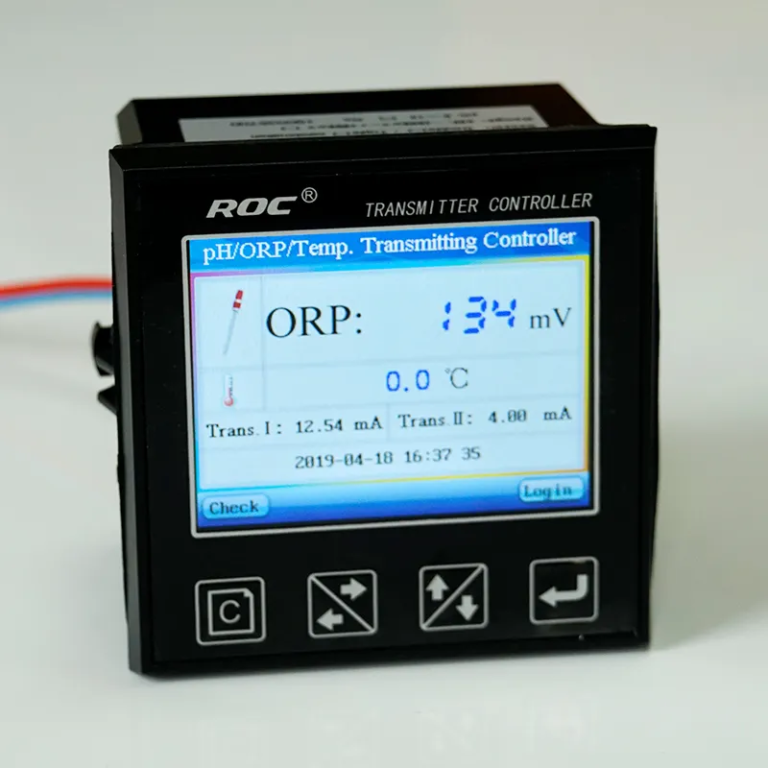
Shanghai ChiMay dissolved oxygen transmitters utilize optical fluorescence quenching technology to provide continuous, maintenance-free DO measurements suitable for demanding reuse environment conditions.
The Critical Role of Dissolved Oxygen in Biological Treatment
Dissolved oxygen serves as the electron acceptor in aerobic biological oxidation, enabling microorganisms to metabolize organic carbon, ammonia, and other pollutants. The concentration of dissolved oxygen in mixed liquor directly impacts:
Process Performance
DO concentrations below 1.5 mg/L trigger oxygen-limiting conditions where:
- Aerobic bacteria shift to facultative metabolism, producing odorous compounds and reducing treatment efficiency
- Ammonia oxidation slows markedly as DO falls below the needs of the nitrifier population
- Organic matter removal efficiency deteriorates
- Sludge settling characteristics deteriorate, causing dispersed growth and effluent suspended solids increases
DO concentrations above 4.0 mg/L in conventional activated sludge:
- Waste energy on aeration without a corresponding performance benefit (aeration typically represents 50-70% of plant electrical consumption)
- Raise operating cost with no gain in treatment capacity
Note that filamentous bulking—the overgrowth of filamentous organisms that causes poor settling—is associated with low DO zones and other stress factors, not with high DO; sustained over-aeration is an energy problem, and the high shear it can produce may also physically damage flocs.
Optimal DO Setpoints
Different treatment zones require different DO concentrations for optimal performance:
- Aeration basin first stage: 0.5-1.5 mg/L (high organic loading favors lower DO)
- Mid-basin zones: 1.5-2.5 mg/L (transitional loading conditions)
- End basin zones: 2.0-3.0 mg/L (low loading enables higher DO without waste)
- Nitrification zones: 2.0-3.5 mg/L (nitrifiers require higher oxygen affinity)
Shanghai ChiMay Optical DO Sensing Technology
Shanghai ChiMay dissolved oxygen transmitters employ luminescent optical sensors that overcome limitations of traditional galvanic and polarographic technologies. The fluorescence quenching principle measures oxygen concentration by monitoring the quenching effect on a proprietary luminescent indicator.
Technical specifications include:
- Measurement range: 0-20 mg/L dissolved oxygen
- Accuracy: ±0.1 mg/L (0-2 mg/L), ±0.2 mg/L (2-20 mg/L)
- Response time: <30 seconds to 90% of final value
- Pressure range: 0-4 bar (continuous), 6 bar (intermittent)
- Operating temperature: 0-50°C
- Salinity compensation: Automatic for 0-50 g/L TDS
The optical sensor’s maintenance-free design eliminates electrode replacement and electrolyte replenishment requirements, cutting routine maintenance workload substantially relative to electrochemical sensors.
Energy Optimization Through DO Control
Aeration energy typically consumes 50-70% of wastewater treatment plant electrical demand, making it the largest controllable energy item at most facilities. Precise DO control through continuous monitoring enables substantial energy savings:
Variable Aeration Control
Process loading varies significantly throughout daily cycles, with peak loads during morning and evening hours and minimum loads overnight. Continuous DO monitoring enables:
- Ammonia-based aeration control: Adjusting aeration intensity based on ammonia breakthrough, rather than DO setpoint alone, delivers double-digit percentage energy savings where the baseline is fixed-speed, fixed-setpoint operation
- Zone-specific aeration: Dividing aeration basins into independent zones with individual DO control targets the over-aeration that persists in lightly loaded zones
- Load-responsive scheduling: Matching aerator operation to diurnal load patterns trims energy during overnight minimums
The magnitude of achievable savings depends on the baseline: plants already running tight DO control will see less than plants still operating blowers at constant output.
Blower Optimization
Maintaining DO at optimal setpoints (rather than fixed setpoints with safety margins) allows:
- Lower average blower discharge pressure requirements
- Reduced throttle valve losses in modulating systems
- Extended equipment life through reduced cycling and wear
Process Stability Benefits
Continuous DO monitoring provides early warning of process disturbances, enabling rapid response before conditions deteriorate:
Sludge Bulking Prevention
Filamentous organism overgrowth, leading to sludge bulking and poor settling, correlates with specific DO patterns. Continuous monitoring enables:
- Rapid detection of zone-specific DO drops that favor filamentous growth
- Identification of insufficient DO periods before bulking becomes established
- Verification of remediation effectiveness during treatment adjustments
Nitrification Protection
Nitrifying bacteria exhibit slow growth rates and sensitivity to environmental conditions. Continuous DO monitoring protects nitrification by:
- Detecting DO drops that inhibit ammonia oxidation before ammonia breakthrough occurs
- Identifying diurnal DO patterns that cause nitrification instability
- Enabling rapid response to equipment failures affecting aeration capacity
Toxic Shock Load Response
Industrial wastewater discharges can cause sudden toxicity that inhibits biological activity. DO monitoring provides early warning through:
- Rapid DO increase as microorganisms cease oxygen consumption
- Sustained elevated DO following toxic load passage
- Verification of biological activity recovery after dilution or equalization
Integration and Control Implementation
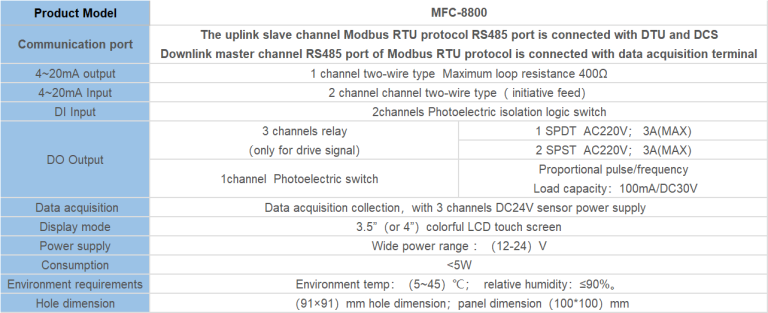
Shanghai ChiMay dissolved oxygen transmitters provide multiple communication options for control system integration:
- Analog output: 4-20 mA current loop for traditional DCS integration
- Digital communication: Modbus RTU/TCP for modern control systems
- HART protocol: Asset management integration with existing infrastructure
- Wireless options: Remote installation without cable infrastructure
Advanced process controllers utilize DO data for:
- PID control of aeration valve positions and blower throughput
- Fuzzy logic optimization of multi-zone aeration control
- Model predictive control incorporating load forecasting
- Machine learning algorithms adapting to facility-specific patterns
Economic Impact Assessment
Investment in continuous DO monitoring is typically in the low-to-mid thousands of dollars per measurement point, including sensor, transmitter, and integration. Economic benefits include:
Energy Savings: Facilities implementing DO-based aeration control commonly report double-digit percentage reductions in aeration energy consumption. Because aeration is the largest single energy item at most plants, even moderate percentage savings translate into significant absolute amounts for larger facilities.
Chemical Savings: Improved biological efficiency reduces external carbon source requirements for denitrification processes.
Maintenance Avoidance: Early process upset detection prevents the remediation costs and permit excursions associated with process failures; a single serious excursion typically costs far more than the monitoring system itself.
Sludge Management: Improved settling characteristics reduce sludge handling and disposal costs.
Conclusion
Dissolved oxygen control represents a fundamental success factor in biological water reuse treatment. Shanghai ChiMay optical dissolved oxygen transmitters provide the measurement accuracy, reliability, and integration capability required for optimized aeration control. Facilities implementing continuous monitoring achieve measurable improvements in treatment efficiency, energy consumption, and process stability.
The combination of maintenance-free optical sensing technology, flexible communication options, and established field performance makes these transmitters a practical choice for modern water reuse facility design and operation.