A hemodialysis patient’s blood is separated from several hundred litres of water per week by nothing more than a semipermeable membrane. That is the reason dialysis water quality requirements are far tighter than drinking water standards, and the reason a water quality failure in a dialysis unit becomes a patient safety event rather than a maintenance issue. Continuous monitoring is not a refinement of the compliance programme; in most units it is what makes the programme work.
Table of Contents
Dialysis Water Quality Requirements
Regulatory Framework
Dialysis water and dialysate quality sit under overlapping requirements:
AAMI / ISO 23500 series: preparation and quality management of fluids for haemodialysis. The ISO 23500 series (Parts 1–5) is the current international standard set; the earlier published as AAMI RD52, “Dialysate for hemodialysis”, has been directly superseded by it, and ISO 23500-5 is the part covering the quality of dialysis fluid.
CMS Conditions for Coverage (42 CFR Part 494): the conditions dialysis facilities must meet for Medicare certification, which include water quality monitoring and record retention requirements.
Manufacturer and professional guidance: water treatment system requirements, along with the AAMI and professional-society recommendations that most survey processes expect to see followed.
Key parameters and limits applied in practice:
| Parameter | Limit | Monitoring approach |
|---|---|---|
| Total chlorine (free plus combined) | ≤0.1 mg/L | Continuous, with alarm |
| Conductivity | Within ±5% of the prescribed value (dialysate typically 12–16 mS/cm) | Continuous, with alarm |
| pH | Typically 6.9–7.6 for dialysate | Continuous or per shift |
| Water conductivity (RO product) | Site-specific, monitored in µS/cm | Continuous |
| Chemical contaminants (aluminium, fluoride, copper, nitrate, etc.) | Per ISO 23500-3 limits | Periodic laboratory analysis |
The conductivity figure deserves attention because it is frequently misstated. Dialysate conductivity is measured in millisiemens per centimetre, not microsiemens: a standard bicarbonate dialysate sits around 13–14 mS/cm. What the machine conductivity display verifies is that the proportioning system is mixing water and concentrate in the right ratio, and the standard requirement is that it stay within ±5% of the prescribed value.
Patient Safety Implications
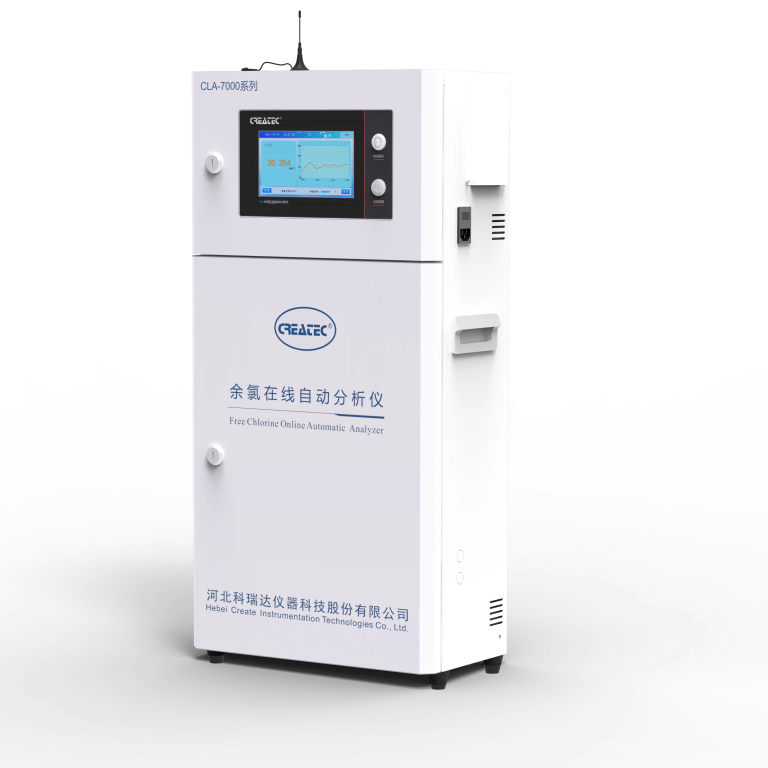
Chemical toxicity: elevated aluminium, fluoride or chloramine can cause acute haemolysis, neurological symptoms and bone disease. Chloramine in particular has caused documented mass haemolysis events where carbon pretreatment was exhausted and monitoring was inadequate, and those incidents are why continuous chlorine monitoring with a hard alarm is treated as essential rather than optional.
Microbial complications: bacteria and endotoxin in dialysate cause pyrogenic reactions, and repeated low-level exposure is associated with chronic inflammation in the nephrology literature — a long-term harm that shows up in inflammatory markers rather than in an acute event.
Clinical cost: a single pyrogenic reaction episode costs a hospitalisation, an investigation, and considerable clinical disruption. Avoiding one episode generally justifies the monitoring system on its own.
Continuous Monitoring Implementation
Conductivity Measurement Systems
Conductivity is the primary continuous parameter on a dialysis water system, functioning as an indirect check on the whole treatment train: RO performance, proportioning accuracy, and the quality of the feed water reaching the machine.
Measurement principle: electrode conductivity indicates ionic content in the water or dialysate, and it responds immediately to changes in dissolved ionic load.
Alarm function: a conductivity deviation typically means a proportioning error, a concentrate supply problem, or a change in feed water quality. Whatever the cause, the machine has to stop before the patient is exposed.
The AAMI/ISO standard requirement is that dialysate conductivity stay within ±5% of the prescribed value. That tolerance is set by the standard, not by the instrument, which is why a sensor with a fraction of that accuracy is the right specification — it leaves the tolerance available for genuine process variation rather than consuming it in measurement uncertainty.
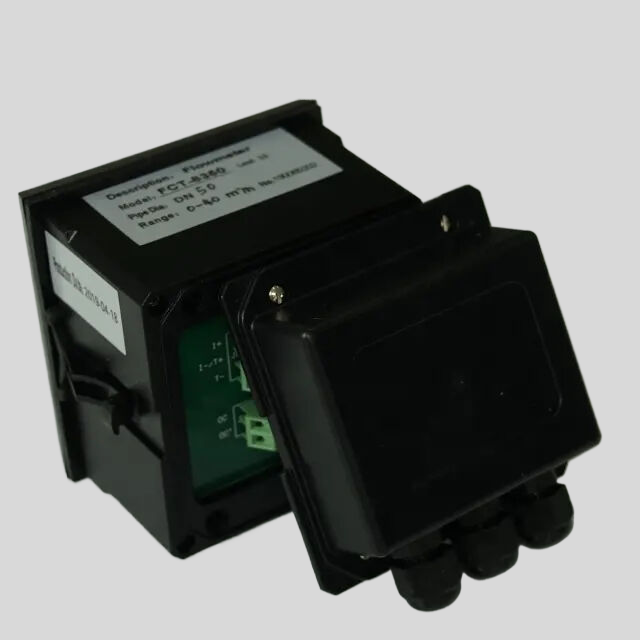
Shanghai ChiMay conductivity measurement systems for dialysis applications:
- Measurement range: suited to both RO product water (µS/cm range) and dialysate (mS/cm range)
- Accuracy: comfortably inside the ±5% standard tolerance
- Temperature compensation: automatic, with dialysate-appropriate compensation curves
- Alarm capability: configurable high/low alarms with relay outputs for machine interlock
- Display: local indication with trend view
System Integration
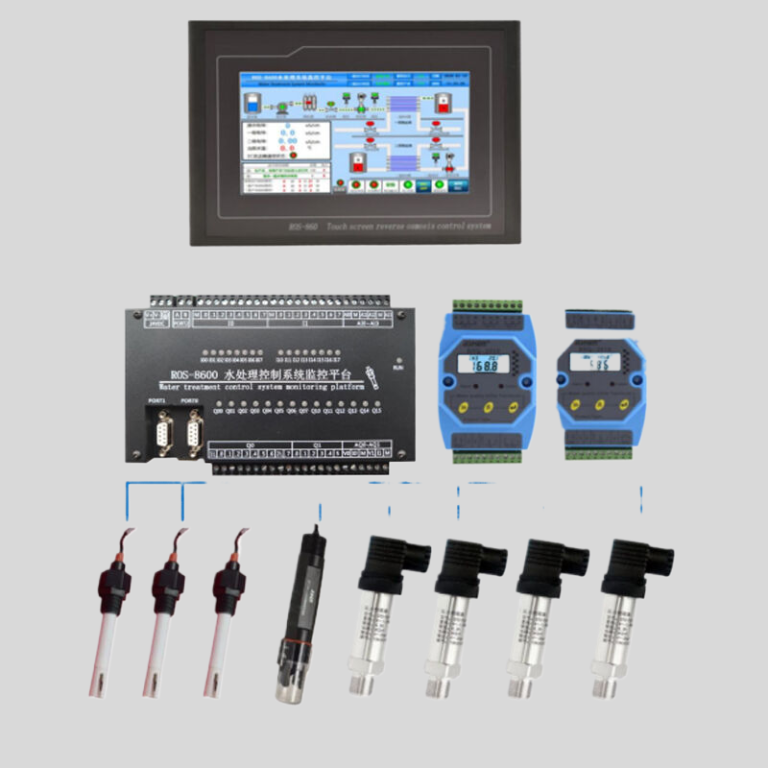
A dialysis unit’s monitoring architecture has four layers:
Sensor layer: conductivity, pH, total chlorine and temperature at the points that matter — after carbon, after RO, and at the machine inlet
Transmitter layer: local indication and alarm outputs
Control layer: interlock to the water treatment system and to the dialysis machines
Documentation layer: records to the facility’s system for survey purposes
One point worth stating clearly: 21 CFR Part 11 is an FDA requirement covering electronic records for products regulated under the drug GMP framework. It is not the governing requirement for a dialysis facility’s water logs. What CMS surveys and accreditation surveys expect is complete, attributable, tamper-evident water quality records kept for the period the facility’s policy and the conditions of coverage require — which is what a properly configured monitoring system produces.
Compliance Documentation
Quality Assurance Records
Survey-relevant documentation typically includes:
- Continuous monitoring data: all conductivity, pH and total chlorine measurements, retained with timestamps
- Calibration records: meter calibration per manufacturer instructions, with the standards used
- Maintenance logs: carbon change-out, RO membrane service, disinfectant residual test records
- Corrective actions: documentation of every exceedance, the response taken, and the clinical follow-up
- Training records: competency documentation for the staff performing water testing
Retention periods follow the facility’s own written policy, the conditions of coverage, and state requirements. The practical rule is that records must be retrievable for the whole period they are required to be kept — not only readable on the machine that produced them.
Inspection Readiness
CMS surveys and accreditation inspections examine dialysis water monitoring systems routinely. Recurring findings:
- Inadequate monitoring frequency — required testing not being performed or not documented
- Calibration deficiencies — expired calibration or missing records
- Alarm response failures — exceedances documented without evidence of a response
- Record integrity — gaps, backdating, or records that cannot be reconstructed
Shanghai ChiMay monitoring systems support survey readiness with timestamped electronic logging, automated calibration reminders, alarm history with acknowledgment records, and export capability for survey preparation.
Total Cost of Ownership
Costs depend on unit size and what is already installed. Monitoring instrument capital for a typical unit is modest compared with the water treatment plant itself; the recurring costs are calibration standards, chlorine sensor consumables and staff time for verification. Against the cost of a single haemolysis incident or an adverse survey finding, the investment case is not close — which is why most units now treat continuous chlorine and conductivity monitoring as standard equipment rather than an option.
Conclusion
Dialysis water compliance comes down to knowing, continuously and with an alarm, that the water reaching the patient is within specification. Total chlorine below 0.1 mg/L, conductivity within ±5% of the prescribed value, pH in range, and an interlock that stops treatment when any of those is lost. Everything else — documentation, calibration, survey readiness — follows from having the monitoring in place and working. Shanghai ChiMay’s conductivity and water quality instruments are specified for exactly that duty.