Water systems draw disproportionate attention during a GMP inspection. They are the one utility in a pharmaceutical facility that touches every product, the one that cannot be sterilised at the end of the process, and the one where a monitoring gap is immediately visible in the records. Water system deficiencies appear repeatedly in FDA Form 483 observations and warning letters — typically as inadequate monitoring, undocumented calibration, or excursions that were noted but not investigated.
The regulatory expectation itself is not complicated. What trips facilities up is data integrity: proving that the numbers in the record are the numbers the instrument produced, that nothing was altered afterwards, and that anyone reviewing the data can see who did what and when.
Table of Contents
Understanding Regulatory Expectations
FDA Water System Compliance Framework
FDA expects a water monitoring programme to demonstrate the following:
Design qualification (DQ): the system is designed to consistently produce water meeting pharmacopeial specifications, with monitoring points, sensor specifications and data collection defined up front.
Installation and operational qualification (IQ/OQ): instruments are installed, calibrated and operated per validated procedures, with documentation showing that monitoring activities conform to the approved specification.
Performance qualification (PQ): ongoing data demonstrates the system consistently produces acceptable water under all expected operating conditions, with statistical analysis supporting the conclusion.
Continuous monitoring: real-time monitoring must deliver data of equivalent or better quality than the manual testing it replaces. FDA’s process analytical technology guidance has encouraged continuous measurement with appropriate process controls for two decades, and the practical result is that continuous data is now the expected evidence base rather than a substitute for it.
Common Regulatory Findings
The recurring themes across inspections are consistent, even though their relative frequency varies year to year and facility to facility:
| Observation category | Typical primary cause |
|---|---|
| Inadequate monitoring frequency | Reliance on manual sampling where a limit is better checked continuously |
| Calibration deficiencies | Missing or incomplete documentation rather than bad calibration |
| Alarm response failures | Exceedances recorded without documented investigation or corrective action |
| Data integrity issues | Manual transcription, backdating, and records that cannot be reconstructed |
The 2018 FDA data integrity guidance applies directly here: electronic records need complete audit trails and restricted access, and paper-based systems need equivalent controls. Automated monitoring addresses those requirements more reliably than manual records, for the obvious reason that a system-generated audit trail cannot be selectively edited.
In the EU, the same pressure comes through EudraLex Volume 4 (EU GMP), where Annex 11 covers computerised systems and the revised Annex 1 for sterile products — applicable since 25 August 2023 — sets expectations for monitoring and control of water systems used in sterile manufacture.
Building a Compliance-Ready Infrastructure
Multi-Layered Monitoring Architecture
A defensible monitoring programme uses independent layers:
Layer 1: continuous sensors — real-time measurement at the critical control points for the water system (loop return, points of use, storage tank).
Layer 2: alarm systems — notification when a reading approaches a specification or action limit, so there is time to act before the limit is breached.
Layer 3: laboratory verification — periodic confirmation testing against the pharmacopeial methods (USP <643> for TOC, USP <645> for conductivity, microbial and endotoxin testing as applicable).
Layer 4: environmental monitoring correlation — water system data compared against facility monitoring, which often explains a trend before it becomes an excursion.
The point of layering is that no single layer has to be perfect. Continuous sensors catch dynamics; laboratory methods provide independent confirmation; alarms buy response time.
Data Management Requirements
21 CFR Part 11 sets out what an electronic record system must provide:
- Electronic signatures: authorised personnel sign off critical data reviews electronically
- Audit trails: every modification, deletion and system event is logged permanently and cannot be switched off
- Access controls: role-based permissions, with the ability to demonstrate who had access to what
- Archive capability: data retained and retrievable for the period the regulations and the facility’s policy require (21 CFR 211.180 sets the baseline for records retention, and product lifecycle considerations generally extend it)
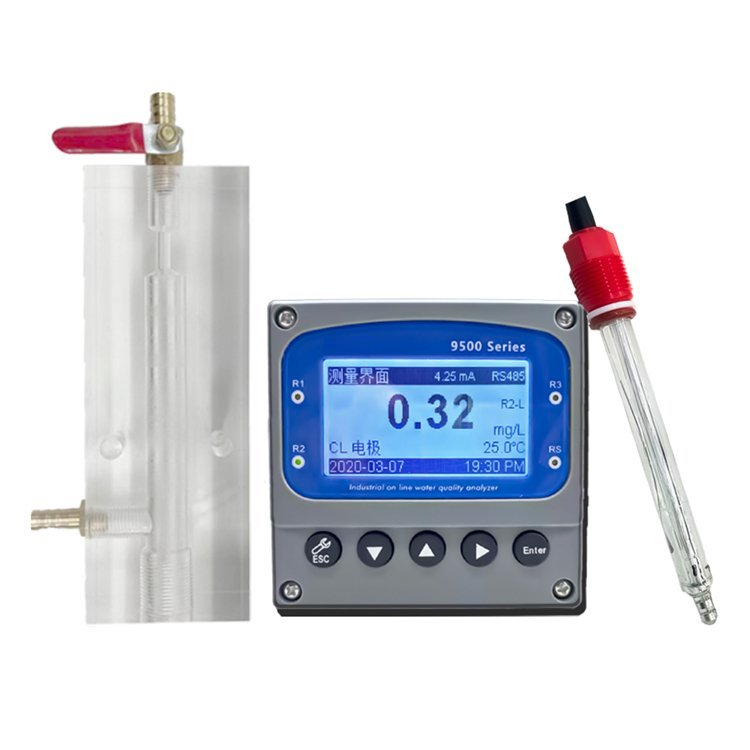
Shanghai ChiMay’s water quality analyser platforms are built with these requirements in mind, with database-backed logging, audit trails and interfaces to quality management systems for review workflows.
Compliance Documentation Framework
Validation Documentation Package
Validation documentation for a water monitoring system follows the standard lifecycle:
- Validation plan defining scope, approach and acceptance criteria
- Design qualification documenting specifications and vendor assessment
- Installation qualification verifying installation against design
- Operational qualification confirming performance against acceptance criteria, including alarm and interlock testing
- Performance qualification demonstrating ongoing suitability for the intended use
Ongoing Compliance Maintenance
| Activity | Suggested frequency | Owner |
|---|---|---|
| Calibration verification | Monthly | Quality Control |
| Sensor performance review | Quarterly | Engineering |
| Audit trail review | Monthly | Quality Assurance |
| Regulatory intelligence | Ongoing | Regulatory Affairs |
| SOP updates | As required | Document Control |
Risk Assessment Approach
ICH Q9 Quality Risk Management
Under ICH Q9, a water monitoring risk assessment should cover:
Patient safety risk: the consequence of a water quality excursion reaching product
Regulatory risk: pharmacopeial non-compliance and the resulting inspection exposure
Operational risk: production interruption caused by the investigation itself
Assessment dimensions:
| Dimension | High risk | Medium risk | Low risk |
|---|---|---|---|
| Detection speed | Delayed or manual | Periodic | Continuous with alarm |
| Severity of impact | Critical | Moderate | Minor |
| Detectability | Difficult | Moderate | Direct measurement |
High-risk monitoring points justify enhanced controls: redundant sensors, more frequent verification, and a documented alarm response procedure with a named owner.
Technology Selection Criteria
When evaluating water monitoring instruments, compliance teams should weigh:
- Regulatory acceptance history: whether the technology has been used in inspections and submissions without objection
- Documentation quality: completeness and audit-readiness of the validation package (IQ/OQ/PQ protocols, calibration certificates, material certificates)
- Integration capability: compatibility with the site’s quality management and batch record systems
- Support infrastructure: response times, spares, and regulatory expertise available from the supplier
Shanghai ChiMay supports pharmaceutical water system validation projects with documentation packages prepared for FDA, EMA and other inspectorates, including risk assessment templates aligned with ICH Q9, IQ/OQ/PQ protocols with pre-defined acceptance criteria, and calibration procedures referenced to the applicable USP general chapters.
Conclusion
Water systems attract inspection attention because a monitoring failure there affects every batch. The equipment side is the easier half of the problem: continuous instruments with audit trails and validated documentation are widely available and well understood. The harder half is operating discipline — reviewing the audit trail on schedule, investigating alarms to a conclusion, and keeping calibration records complete. Facilities that do both get fewer observations, and the documentation to prove they did not need to be told twice.
Shanghai ChiMay’s water quality analyser platforms and validation documentation are aimed at that combination of instrument performance and record integrity.