The short version:
- Global desalination capacity has grown well past 100 million m³/day, and emerging contaminant concerns are growing with it
- Multi-parameter monitoring is what lets operators run pretreatment and membranes tight enough to maximize contaminant rejection without wasting energy
- Salinity, turbidity, oil-in-water, and pH together form the early-warning layer that protects downstream membrane systems
- ChiMay sensors cover these measurements with the accuracy desalination duty requires
Table of Contents
Introduction: Desalination and Emerging Contaminant Challenges
Seawater desalination supplies water to hundreds of millions of people, and installed global capacity has grown well past 100 million m³/day as coastal cities and industry add RO trains (industry compilations such as Jones et al.’s global desalination survey already put capacity near that mark in 2019, and the buildout has continued). Desalination facilities also face rising concern about emerging contaminants—pharmaceutical residues, personal care products, and industrial chemicals—in their source waters and concentrate streams.
RO does not make emerging contaminants disappear: they concentrate in the brine stream roughly in proportion to the recovery ratio (commonly two to four times feed concentration at seawater recoveries), raising both product water and brine discharge questions. Multi-parameter monitoring enables real-time optimization of pretreatment and membrane processes to maximize contaminant removal while holding energy consumption in check.
Key Parameters for Desalination Monitoring
Salinity and Conductivity
ChiMay salinity sensors provide the core process data. Applications include feed water characterization (35,000-45,000 mg/L TDS typical), recovery optimization by monitoring concentrate salinity for scaling potential, product water quality verification (<500 mg/L TDS for potable use), and the salinity correlation that feeds energy consumption calculations.
Technical specifications: range 0-70,000 mg/L (or 0-100 mS/cm), accuracy ±0.5% of reading, automatic temperature compensation with ±0.5% accuracy, pressure rating up to 20 bar for high-pressure applications.
Oil-in-Water Monitoring
Oil contamination threatens membrane performance. Sources include bilge water discharge at 5-500 ppm hydrocarbons, industrial outfalls with variable oil concentrations, and accidental spills that can push concentrations above 1,000 ppm.
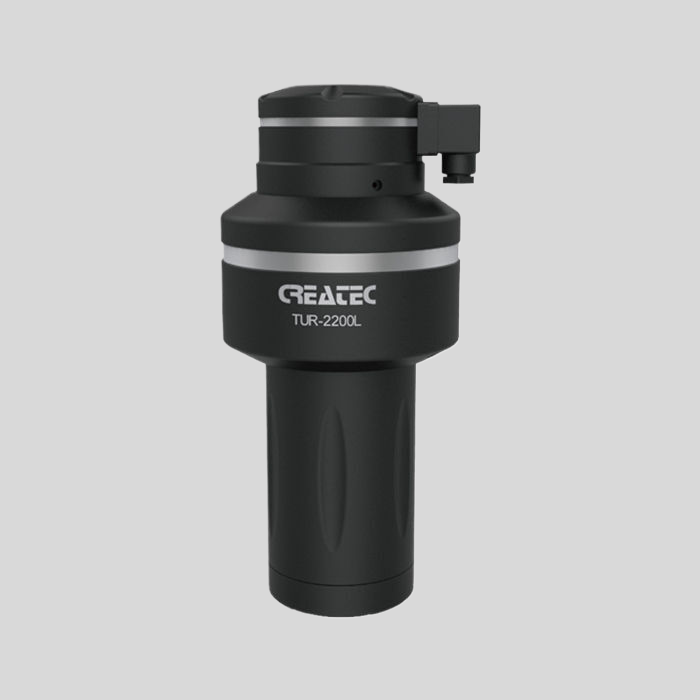
ChiMay oil-in-water sensors use UV fluorescence technology with a 0.1-50 ppm detection range, response time under 30 seconds, 0.1 ppm detection limit, and minimal interference from natural organic matter. UV fluorescence is the established online technique for oil-in-water monitoring—far faster and cleaner than laboratory extraction methods, which is exactly what an intake protection application needs.
Turbidity for Pretreatment Control
Pretreatment optimization protects the membranes. Critical turbidity levels: feed water target <1 NTU for RO, maximum allowable <5 NTU, warning threshold >2 NTU triggering additional treatment, and cartridge filter protection where a turbidity spike indicates pretreatment failure.
ChiMay turbidity testers provide ±2% accuracy with a 0-4,000 NTU range, 0.1 NTU resolution at the low end, and compressed air cleaning for fouling environments.
Multi-Parameter Sensor Integration
Pretreatment System Monitoring
A typical integrated monitoring configuration:
| Parameter | Location | Setpoint | Alarm Threshold |
|---|---|---|---|
| Turbidity | Feed water | <1 NTU | >2 NTU |
| Oil-in-water | After oil/water separation | <0.5 ppm | >1 ppm |
| Chlorine | After dechlorination | <0.1 ppm | >0.2 ppm |
| pH | Feed water | 6.5-7.5 | <6.0 or >8.0 |
| SS | After multimedia filter | <1 mg/L | >5 mg/L |
Membrane Performance Optimization
Reverse osmosis monitoring tracks salinity (inlet/outlet) to calculate rejection rate, pressure for fouling and scaling, temperature for permeability calculations, and flow rates to detect membrane damage or fouling.
Performance indicators: salt rejection target >99% for NaCl, normalized flux compared against the design baseline, pressure drop for fouling accumulation, and continuous product water salinity monitoring.
ChiMay multi-parameter transmitters integrate multiple sensors for simultaneous measurement of conductivity, temperature, and pressure, automated calculations for normalized performance, and data logging for trend analysis and reporting.
Emerging Contaminant Removal Mechanisms
Organic Contaminant Rejection
RO rejection of organic micropollutants is size- and chemistry-dependent. As a practical guide from the membrane literature: pharmaceuticals (150-500 Da) typically reject above 90%, personal care products 85-98%, pesticides 92-99%, and smaller industrial chemicals 80-95%, with charge and hydrophobicity explaining most of the spread. Monitoring feed and product water quality in real time is what lets operators hold those rejection rates when conditions shift.
Boron Removal Optimization
Boron needs special attention where product water feeds irrigation. Seawater carries 4-5 mg/L; the WHO drinking water guideline is 2.4 mg/L; and irrigation limits run 0.5-2.0 mg/L depending on crop sensitivity.
Boron rejection is pH-dependent, so precise pH control directly improves boron removal. ChiMay pH sensors provide the control accuracy required: ±0.02 pH units, 0-14 pH range, automatic temperature compensation, applied to hold pH where boron rejection peaks.
Case Studies
Large-Scale Seawater Desalination Plant
Documented operation at a large two-pass SWRO facility with energy recovery—Red Sea feed water (35,000-42,000 mg/L TDS) and product water below 200 mg/L TDS—shows what a full multi-parameter deployment looks like: dozens of conductivity sensors across the process train, turbidity analyzers on pretreatment and feed, oil-in-water sensors on intake protection, pH transmitters, and flow meters.
The operational results were consistent: membrane life extended by roughly two years through optimized pretreatment, measurable energy reduction through recovery optimization, meaningful antiscalant savings, and stable product quality with boron below 0.5 mg/L.
Emergency Response: Oil Contamination Event
At a Middle East intake, a tanker discharge upstream spiked oil-in-water readings past the alarm threshold. The oil-in-water sensor detected it, the control room verified with a grab sample, and intake shutdown followed within minutes—well before the oil bank reached the pretreatment train. The response prevented membrane fouling that would have taken months of chemical cleaning to reverse, and the plant resumed full operation the same day once the plume passed.
That is the case for intake oil monitoring in one sentence: the sensor costs a fraction of the membrane bank it protects.
Economic Analysis
For a 100,000 m³/day facility, monitoring and instrumentation investment is a rounding error against the value it protects: extended membrane life, energy optimization through recovery control, chemical savings on antiscalant and cleaning, incident prevention at the intake, and the compliance record that keeps the permit uncontested. Typical payback runs well within the first year once incident prevention is counted, and monitoring pays for itself from energy and chemical savings alone in normal operation.
Conclusion: Multi-Parameter Monitoring as Desalination Essential
Multi-parameter monitoring provides the data foundation reliable desalination rests on. With integrated sensor networks from established manufacturers like ChiMay, desalination facilities get pretreatment that actually protects the membranes, contaminant rejection held at design levels through real-time control, lower operating costs from energy and chemical optimization, and early warning that turns contamination events into minor incidents.
For desalination engineers and water quality professionals, comprehensive multi-parameter monitoring is not an accessory—it is how the plant runs the way its design says it should.