A dye house is judged on shade consistency and delivery, not on its water bill. That is exactly why water management is where the easy savings are. In most textile finishing plants, water is the largest utility cost after energy, and a significant share of it leaves the plant carrying heat, chemicals, and colour that were paid for and never used in the process.
This article covers where the water actually goes in a dye house, the operational changes that reduce it without touching shade consistency, and the measurements that make those changes stick.
Table of Contents
Where the Water Goes
A dye house’s water use is dominated by washing and rinsing. Rinsing after dyeing and after printing accounts for the largest single share of the plant’s water intake—in most mills, more than half—because each rinse step runs long enough to reach a target liquor clarity, and the rinse sequence is repeated for every batch.
The rest goes to:
- Dye and chemical makeup water, which is a small volume but a demanding quality requirement, since hardness and metal ions affect shade
- Boiler and steam system makeup, where the water is lost as condensate or as blowdown
- Cleaning between batches, both of machines and of the surrounding floor and equipment
- Cooling and scrubbing, including the water used in exhaust treatment
The two categories that matter most for a reduction programme are rinsing (large volume, operational flexibility) and makeup water (small volume, high quality requirement). Reducing rinse volume is where the first savings come from; reusing water is where the larger structural savings come from.
Rinse Water: The Biggest Single Opportunity
Rinse water is governed by how the operator decides a rinse is finished. In a plant running on manual judgement or on a fixed time schedule, the rinse runs to the safe side—which means running longer than necessary on most batches and still occasionally running short on the difficult ones.
The change that works is to replace the judgement with a measurement. A conductivity or turbidity reading on the rinse liquor tells the operator whether the residual dye and salt concentration has reached the level the next step requires. Once that measurement is in place:
- Rinse sequences can be shortened where the reading shows the target has been reached early
- Counter-current rinsing becomes practical, because the cleanest rinse water goes to the final rinse stage and flows backward through the earlier stages, so each stage sees water that is cleaner than it would be in a once-through sequence
- Batch-to-batch variation in rinse time is removed, which helps consistency as well as water consumption
Mills that install rinse monitoring and counter-current rinse arrangements report reductions in rinse water use, with the size of the reduction depending on how conservative the original fixed sequence was and on the machine configuration. The saving is realised without any change to the dyestuff or the shade target.
Reuse and Recycling
Water leaving a dye house carries heat, salt, and colour, and each of those determines whether it can be reused.
Heat recovery is the simplest win, and it is independent of water quality. Hot rinse water can be used to preheat incoming process water through a heat exchanger, which reduces the steam demand for the next bath. The water then goes to the treatment plant no warmer than it otherwise would have.
Reuse by quality tier. Water from the final rinse stages is far cleaner than water from the first rinse after the dyebath. Rather than mixing them and treating the whole stream, the cleaner streams can be segregated and reused for less demanding steps: first rinses, equipment washdown, or scrubbing.
Reuse with treatment. Dyeing water is not infinitely reusable—accumulated salt, residual colour, and dissolved organics limit the number of cycles unless the water is treated. Membrane treatment and advanced oxidation extend the reuse potential, but they raise the cost per cubic metre substantially. The engineering question is not whether these technologies work, but whether the value of the water and the discharge limit justify the treatment cost at the plant’s location. Where discharge limits are tight and water is expensive, reuse with treatment usually pays. Where water is cheap and the discharge is to a municipal sewer with headroom, the case is harder.
Reuse is a careful business in a dye house. A stream that carries residual dye or hardness into a light shade will produce a rework, and the cost of one reworked batch can exceed a month of the water saving. Reuse systems need to be designed with the quality-critical steps, especially the dye and chemical makeup water, kept on fresh water.
Process Control: pH, Temperature, and Dosing
Dyeing depends on chemical conditions being held within a narrow band. pH controls how the dye fixes to the fibre, temperature drives the fixation kinetics, and the dosing of salt, alkali, and auxiliaries determines the exhaustion of the dyebath.
Automated control of these parameters serves quality first and resource efficiency second:
- pH control on an automated dosing loop holds the dyebath at the target setpoint with a measured response, instead of an operator correcting in steps. A closed-loop system typically consumes less acid and alkali than open-loop manual dosing, because the correction is made in proportion to the deviation rather than in generous fixed additions, and it holds the bath within a much narrower band.
- Temperature profiling with accurate control reduces the heat required to drive fixation and reduces the likelihood of a bath being held longer than necessary at temperature.
- Exhaustion monitoring makes it possible to end a bath when the dye has actually exhausted, rather than when the schedule says the bath is finished. This shortens cycle time and cuts the load in the effluent.
The instrumentation that makes this work is unglamorous: reliable pH electrodes with proper temperature compensation, conductivity measurement for salt concentration, temperature sensors with matched calibration, and a control system that logs the data. The logging matters, because it is what shows that the bath ran to the recipe on every batch.
Effluent Treatment: Reducing Energy and Chemicals
Textile effluent treatment plants consume energy mainly through aeration and pumping, with aeration usually the largest single load—it commonly accounts for the largest share of a treatment plant’s electricity consumption. Biological treatment needs dissolved oxygen, but it does not need the same amount all the time: load varies with the production schedule, so a fixed aeration rate means over-aerating during light load periods.
Dissolved oxygen control matches aeration to the actual oxygen demand. The blower output is modulated on the DO reading in the basin, which cuts aeration energy relative to fixed-rate operation while maintaining the dissolved oxygen level the biology requires. Most plants that convert from fixed to DO-controlled aeration report a reduction in aeration energy, and the size of it depends on how oversized and how constant the original aeration regime was.
On the chemistry side, coagulant and flocculant dosing for colour removal is often set at a fixed rate. Turbidity and colour measurement on the clarifier inlet and outlet allows the dose to be trimmed as the load changes, which reduces chemical consumption and reduces the volume of sludge produced. Sludge handling is a major cost in textile effluent treatment, so reducing the dose has a double benefit.
Train the Operators
None of the above survives without the people running the plant. A dye house’s water use depends heavily on operating decisions: how long to rinse, whether to reuse a rinse stream, when to end a bath, whether to correct a treatment dose or to add more chemical.
Training that makes a difference covers three things:
- Why the measurement matters. An operator who understands that the rinse step is judged by the conductivity reading, and that the reading is what defines the endpoint, will use the instrument rather than defaulting to the safe schedule.
- What the numbers mean. Rinse conductivity, dyebath pH, treatment basin DO, and clarifier turbidity all have alarm thresholds that mean a specific action. Operators need to know the action, not just that an alarm has sounded.
- Who checks what, and how often. Calibration and verification schedules for the instrumentation — a drifting pH electrode or a fouled turbidity window undermines every decision made from that reading.
The most durable improvements in textile water use come from plants where the instrumentation data is reviewed weekly, and where the review asks one question: if the water use changed, which operating decision changed with it?
The Business Result
The savings in a dye house water programme come from four places:
- Reduced fresh water intake, from shorter and counter-current rinsing and from segregation and reuse of cleaner streams
- Reduced chemical consumption, from closed-loop pH and dosing control and from dosing coagulants to a measurement rather than a fixed rate
- Reduced energy, from heat recovery on hot rinse water, from shorter cycle times, and from DO-controlled aeration in the effluent plant
- Reduced effluent load and discharge cost, from lower volume and lower residual chemical content reaching the treatment plant
The size of each depends on the plant: the machine configuration, the fabric and dye classes, the existing level of control, and the local costs of water, effluent discharge, and energy. The way to size it is to baseline the plant’s own water and chemical consumption by process step, implement one change at a time, and measure the effect—which is also the only way to convince the production team that the change did not cost them anything in quality.
Conclusion
Sustainable dye house operation is not a matter of installing a treatment technology. It is a matter of measuring where the water goes and controlling the processes that consume it: rinse endpoints, bath chemistry, treatment dosing, and aeration. The plants that get this right are not the ones with the most ambitious sustainability target; they are the ones with instrumentation on the rinse line, a control loop on the dyebath, and a weekly review of the numbers.
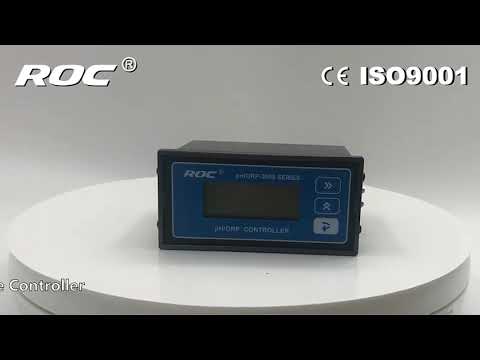
Shanghai ChiMay supplies pH controllers, conductivity meters, dissolved oxygen analyzers, turbidity sensors, and multi-parameter monitoring systems for textile dyeing and finishing plants and their effluent treatment facilities.