Reclaimed water for irrigation lives or dies on turbidity. It is the parameter regulators use as the primary particulate proxy, the one that governs downstream disinfection dose, and the one that decides whether a farm offtake keeps receiving water. But the limits differ enough between jurisdictions that a specification written for one market will not pass in another, and in practice reliable turbidity monitoring depends far more on placement, hydraulic conditioning and cleaning discipline than on the sensor itself.
Table of Contents
The Regulatory Context Drives Sensor Design
Three regimes matter for irrigation reuse, and they do not agree with each other:
- EU Regulation 2020/741. Class A reuse — the category covering food and fodder crops consumed raw — sets turbidity at ≤ 5 NTU at the 90th percentile, with an absolute maximum of 10 NTU.
- California Title 22. Filtered wastewater from media filtration must hold a 24-hour average of ≤ 2 NTU, must not exceed 5 NTU for more than 5 % of the time, and must never exceed 10 NTU (22 CCR §60301.320). Membrane-filtered water faces the tighter pair: 0.2 NTU for 95 % of the time, 0.5 NTU never exceeded.
- China. GB 20922-2007 governs farmland irrigation reuse by crop category — fibre crops, dry grain and oil crops, paddy grain and open-air vegetables — with mandatory limits on BOD₅, COD, suspended solids, DO, pH, TDS, chloride, sulfide, petroleum, phenols, anionic surfactants, hexavalent chromium and faecal coliforms. Turbidity is not one of the controlled items; suspended solids plays that role.
In all three cases the monitoring obligation lands on continuous online measurement rather than batch sampling, which translates into three hard requirements on the instrument: low drift, low fouling, and data logs an auditor can follow.
The typical reuse train is coagulation → filtration → disinfection → distribution. Turbidity is measured at three of those points at minimum:
- Post-filtration turbidity — the compliance signal.
- Pre-disinfection turbidity — the process-control signal that sets UV dose or chlorine residual.
- Distribution turbidity — the customer-facing signal for the irrigation offtake.
Measurement Technology Choices
Two optical technologies dominate reuse turbidity monitoring.
Nephelometric (90° scatter) sensors follow ISO 7027 or EPA Method 180.1 and are the standard for compliance reporting. Detection range is typically 0–40 NTU with resolution to 0.01 NTU at the low end. This is the right instrument for the polished-water compliance point.
Ratio nephelometric sensors combine 90° scatter with a forward-scatter or transmitted-beam reference channel to compensate for colour, LED ageing and lamp drift. Range extends to 0–4000 NTU, which suits the raw or partially treated stream.
For a full reuse plant, a ratio-nephelometric sensor upstream of filtration and a standard nephelometric sensor at the compliance point is the correct pairing.
Sensor Placement — Where Reuse Plants Get It Wrong
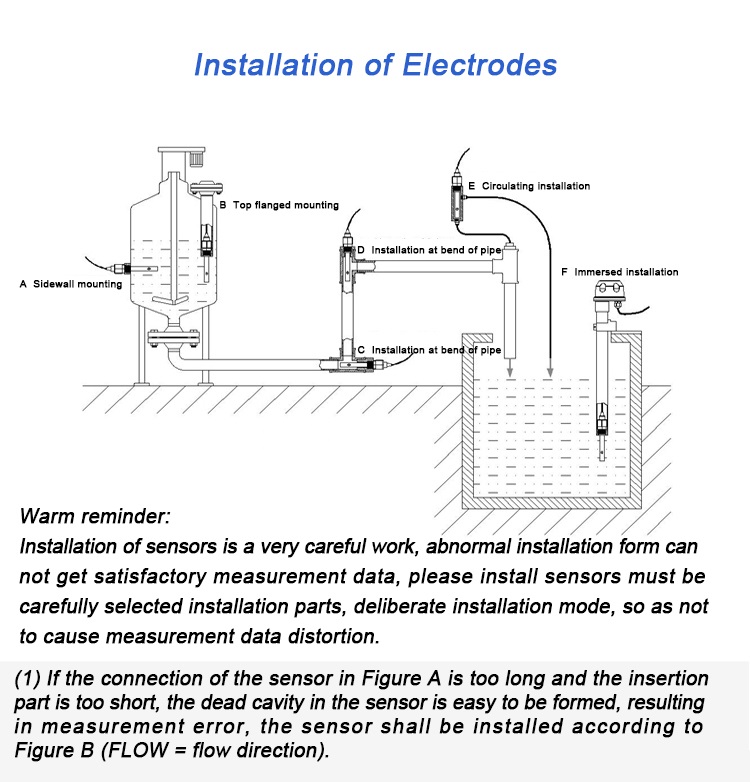
Turbidity sensors fail more often from bad placement than from bad hardware. The recurring installation errors and their fixes:
Error 1: Direct Sunlight
Optical sensors read sunlight as noise. Fix: install in a closed process cabinet or fit a light shield to the flow cell.
Error 2: Air Entrainment
Bubbles are optical particulates and cause spurious high readings. Fix: take the sample from the bottom of a full pipe, not off a weir or a drop. Install an air-elimination chamber upstream of the sensor.
Error 3: Sedimentation
If the flow through the sensor drops below 0.3 m/s, particulates settle on the optical window. Fix: size the sample loop for 0.5–1.5 m/s velocity; use a bypass with a metering valve rather than a static branch.
Error 4: Chemical Fouling
Reclaimed water carries dissolved organics that deposit as films on optical windows. Fix: specify sensors with automated wiper cleaning on 15-minute intervals; supplement with a weekly manual isopropanol wipe.
Error 5: Assuming Turbidity Needs Flow-Meter Straight Runs
Turbidity, unlike flow, does not need long straight runs. It does need stable flow patterns. Fix: install at least 3 pipe diameters downstream of any elbow or valve and confirm the flow pattern is stable at operating rates.
Data-Logging and Compliance Reporting
Regulators require timestamped, tamper-evident records. Sensor procurement should require:
- Local data-logging at 1-minute intervals with at least 90 days of buffer memory.
- Secure Modbus RTU or Ethernet transport to the plant SCADA.
- Automatic percentile reporting — 90th percentile and maximum on 24-hour rolling windows.
- Audit trail for all calibration and cleaning events, exportable in CSV.
Sensors that meet these requirements pass audits with minimal operator effort. Sensors that do not consume weeks of engineering time reconstructing compliance records.
Calibration and Drift Management
Turbidity calibration uses formazin standards at multiple concentrations (typically 0, 1, 10, 100 NTU) or stabilised styrene divinylbenzene beads for longer shelf life. A workable discipline:
- Two-point calibration monthly using 0 NTU and one in-band standard.
- Full four-point calibration quarterly.
- Zero-point verification weekly during initial commissioning to characterise baseline drift.
Modern reuse plants track calibration statistics in the SCADA and flag any sensor whose drift exceeds 5 % over two consecutive calibrations as a candidate for wet-end refurbishment.
Redundancy Strategy
Compliance-grade reuse discharge should not depend on a single sensor. The architecture we recommend:
- Primary turbidity sensor on the compliance line, nephelometric.
- Backup turbidity sensor in parallel or upstream, ratio nephelometric.
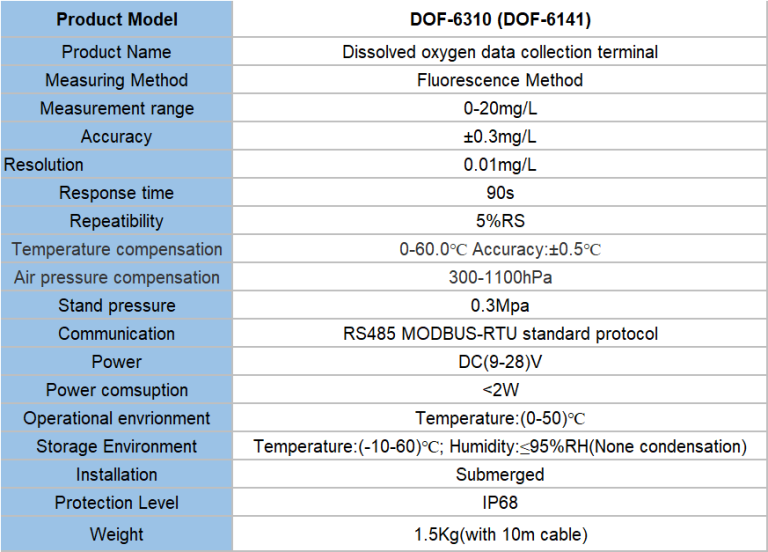
- Multi-parameter validator — a 4-in-1 sensor at the same location providing pH, conductivity, dissolved oxygen and temperature, so that a turbidity excursion can be cross-checked as process-real rather than sensor drift.
- Grab-sample port with locked chain-of-custody for regulator verification.
This four-layer arrangement absorbs a single-sensor failure without turning it into a non-compliance event.
Integration With Downstream Reuse Control
Turbidity is not only a compliance signal; it is a control signal for disinfection dosing. A rise in pre-disinfection turbidity means suspended particles will shield pathogens from UV or chlorine. Reuse plants therefore feed turbidity into a dose-pacing loop that raises UV intensity or chlorine setpoint automatically, which turns turbidity from a passive alarm into an active safety function.
Engineering guidance for that loop:
- Sample time: 10-second update to the dose controller.
- Filtering: 60-second rolling average to reject bubble spikes.
- Setpoint: process turbidity + 20 % safety margin before triggering a dose increase.
- Failsafe: revert to maximum dose if signal quality is lost for more than 60 seconds.
Where Shanghai ChiMay Fits the Reuse Turbidity Stack
Shanghai ChiMay’s online turbidity tester is available in both standard nephelometric (0–40 NTU) and ratio nephelometric (0–4000 NTU) formats. Both share the same electronics, wiper mechanism and communications, which keeps spares simple. The wiper is programmable from every 5 minutes to every 24 hours, and the sensor supports automatic zero-verification using a shutter-based reference channel.
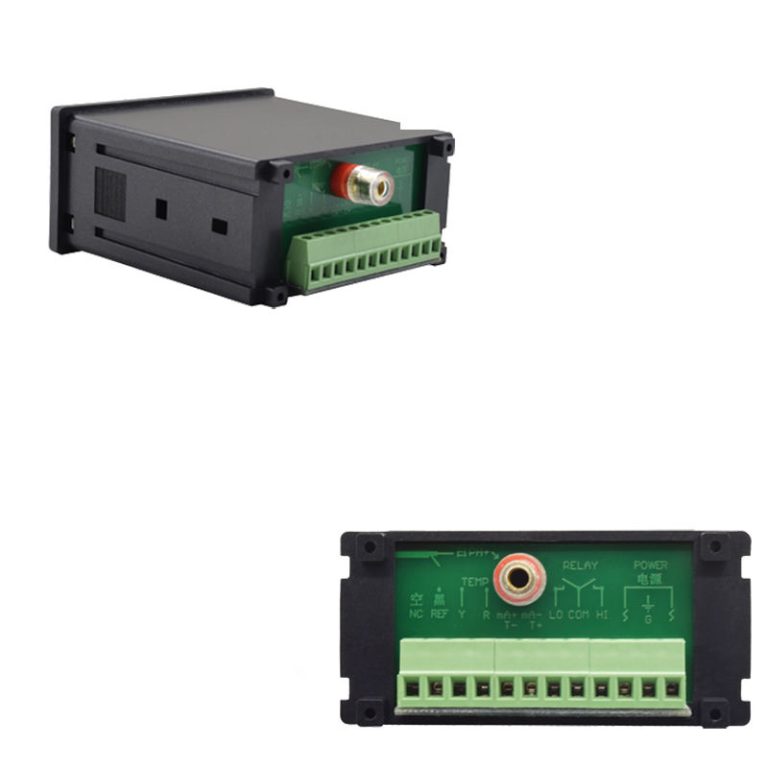
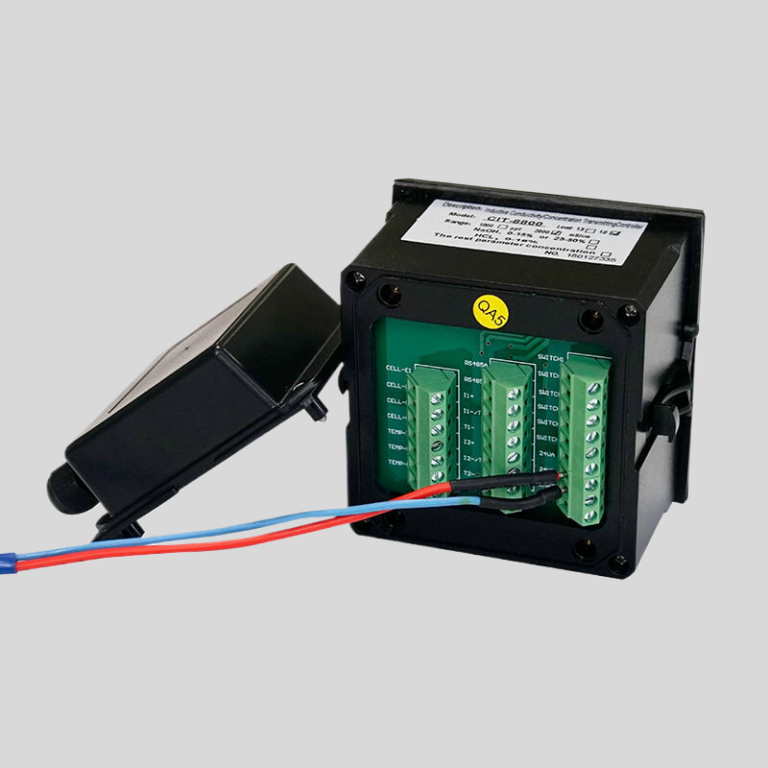
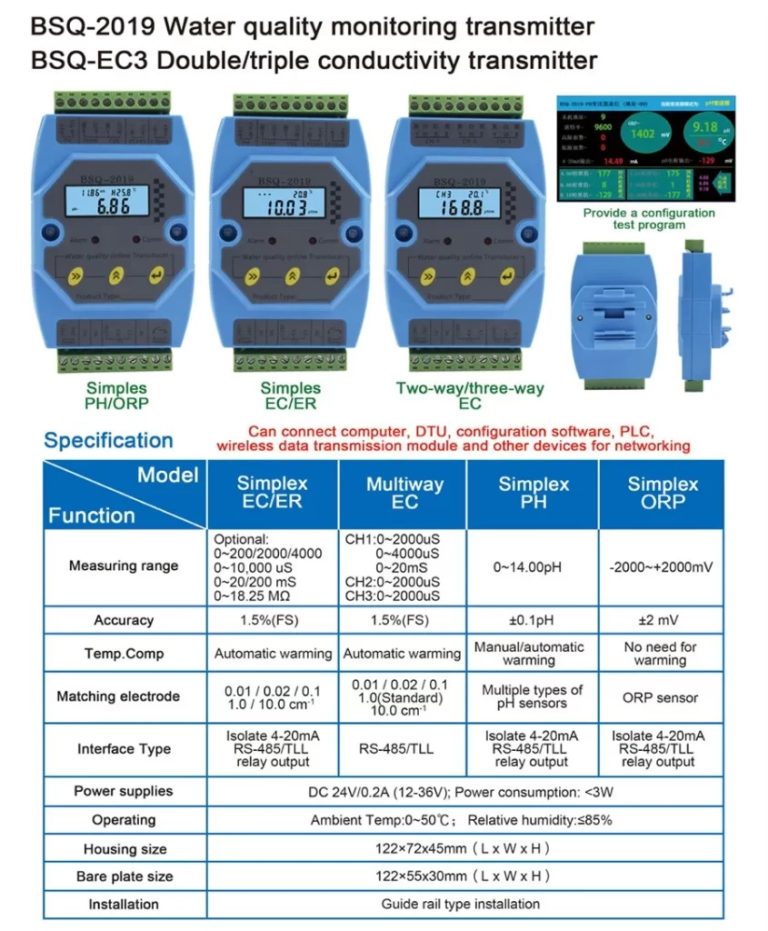
For the redundancy layer, the 4-in-1 multi-parameter sensor provides pH, ORP, DO and temperature at the same measurement point, feeding plant SCADA the cross-check signals needed to validate turbidity excursions. Both instruments terminate on the 2-in-1 mini transmitter with 4–20 mA and Modbus RTU outputs, so integration into an existing reuse-plant SCADA takes hours rather than days.
Closing Note
Turbidity is the smallest signal in the reuse plant with the largest compliance consequence. Getting it right is perhaps 20 % sensor selection and 80 % placement, cleaning discipline and redundancy. Operators who treat the sensor as process equipment — not as a black box bolted onto the discharge pipe — end up with a monitoring stack that passes audits year after year without drama. That is the operational endpoint reuse buyers should design toward.