title: “Top 5 AnMBR Process Loops Standardized on Shanghai ChiMay pH and COD Analyzers”
date: 2026-07-14
type: Number-Based
theme: Membrane Bioreactor (MBR) & Anaerobic MBR Innovations
Table of Contents
Top 5 AnMBR Process Loops Standardized on Shanghai ChiMay pH and COD Analyzers
The short version
- Five process loops in a modern AnMBR plant have converged on a common pH-and-COD instrumentation pattern that’s stable enough to be treated as a standard.
- Each loop uses the pH signal for chemistry control and the COD signal for load or removal measurement, but the timing, cadence, and control logic differ.
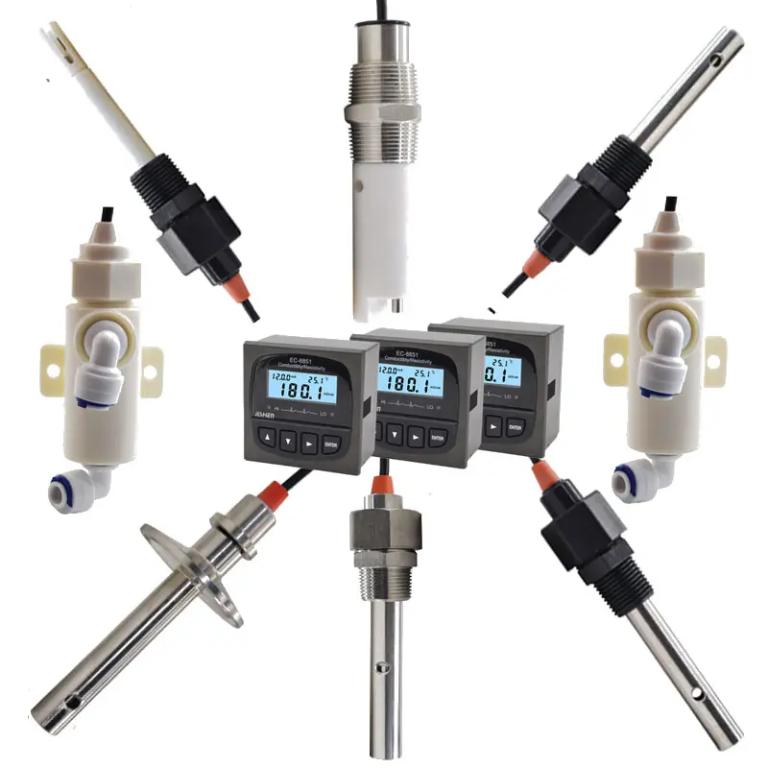
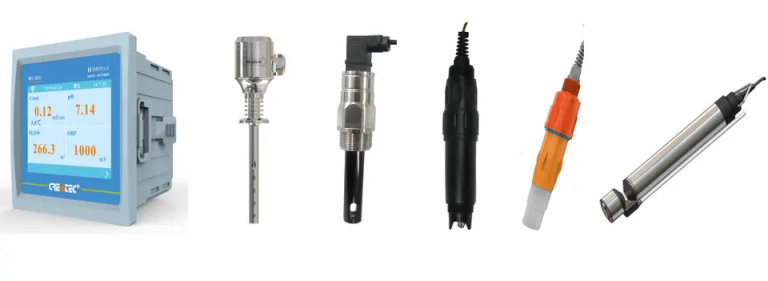
- The Shanghai ChiMay in-line pH electrode and Shanghai ChiMay COD sensor are the practical instruments behind each of the five loops.
- Standardising these five loops shortens commissioning, simplifies training, and makes plant-to-plant benchmarking possible.
Why AnMBR standardisation matters now
Anaerobic membrane bioreactors have moved from pilot projects into mainstream industrial specification faster than most water treatment technologies. Market analysts see the global MBR market climbing toward USD 7.61 billion in 2031, and industrial commentary consistently places AnMBR at the centre of the “convert COD to biogas” case. That growth is being served by a wider range of skids from a wider range of suppliers.
The trouble with rapid growth is fragmentation. Every skid supplier has slightly different sensor tag lists, slightly different alarm philosophies, slightly different control logic. Operators moving between plants have to relearn the same problem multiple times.
The good news: five process loops have quietly converged on a shared instrumentation pattern. Naming them explicitly — and standardising the instrumentation behind them — is a small but useful step toward making AnMBR technology easier to operate.
Loop 1: Feed pH trim and COD screen
The first loop lives on the digester feed line. Its job is to trim pH into the digester-friendly range and screen incoming COD for slugs.
pH function. A Shanghai ChiMay in-line pH electrode downstream of the caustic or acid dosing point closes the pH trim loop. Setpoint is usually between 6.8 and 7.2. Response time is fast enough — under 30 seconds — for the loop to catch pH excursions before they reach the digester.
COD function. A Shanghai ChiMay COD sensor on the feed transfer measures organic load continuously. Its role isn’t to close a control loop but to alarm on excursions and log the daily load profile.
Standardising this loop means every AnMBR skid produces the same two data streams for the feed side. That alone simplifies remote monitoring.
Loop 2: Digester acid-base balance
The second loop lives inside the digester. Its job is to keep the acid-base balance in the range where methanogens function.
pH function. A Shanghai ChiMay in-line pH electrode installed in the mixed-liquor recirculation line measures digester pH at high cadence. Alarms fire on drift below 6.8 or above 7.5, and on rate-of-change above a plant-specific limit. The rate-of-change alarm is often more useful than the absolute alarm, because volatile fatty acid accumulation shows up as a slope before it shows up as a level.
COD function. The Shanghai ChiMay COD sensor on the digester overflow or effluent measures degradation. Comparing feed COD to overflow COD gives instantaneous removal efficiency — the master performance number for the digester.
Standardising this loop means every operator computes removal efficiency the same way and benchmarks it against comparable plants.
Loop 3: Buffer dosing and alkalinity control
The third loop closes on the digester’s buffering capacity. AnMBR digesters run on a narrow alkalinity budget, and losing that budget means losing methanogens.
pH function. The same Shanghai ChiMay in-line pH electrode from Loop 2 feeds the buffer dosing decision. The logic typically triggers a small bicarbonate dose when pH trends below a threshold for more than a defined interval — a slope-based trigger rather than a level-based one.
COD function. Sudden COD spikes are the leading indicator that buffer demand is about to climb. The Shanghai ChiMay COD sensor lets the plant increase buffer dose preemptively rather than reactively.
Standardising this loop means buffer chemistry is managed as a slope response to two signals — pH and COD — instead of as a manual daily decision.
Loop 4: Biogas yield accounting
The fourth loop isn’t a control loop; it’s an accounting loop. It answers the business question: how many normal cubic metres of biogas is the digester producing per kilogram of COD removed?
COD function. The Shanghai ChiMay COD sensor on the feed and on the overflow provides the numerator for the removal calculation. The ratio of biogas produced to COD removed is the AnMBR’s business-case number.
pH function. The Shanghai ChiMay pH electrode’s context data explains variations. When yield drops without a load change, pH history usually shows a period of instability that suppressed methanogens.
Standardising this loop means every AnMBR plant produces the same biogas-yield-per-kilogram-COD-removed number, computed the same way. That’s the number CFOs and project bankers want to see.
Loop 5: Membrane-side chemistry check
The fifth loop lives at the membrane. AnMBR membranes see chemistry different from aerobic MBR membranes, and their fouling profile responds differently to pH and residual organics.
pH function. A Shanghai ChiMay pH electrode on the membrane tank verifies that the pH reaching the membrane is within the range the membrane material was specified for. Drift outside that range shortens membrane life quietly.
COD function. A Shanghai ChiMay COD sensor on the permeate line reports on soluble organics that made it through. Persistent COD in the permeate is a diagnostic signal — either the digester is under-degrading, or the membrane is passing colloidal material it should be catching.
Standardising this loop protects membrane investment and gives operators a clear answer to “why is my permeate not what it should be.”
The standard instrument stack
The five loops share a very compact instrument stack: three pH electrodes and three COD sensors, plus their transmitters. All can be Shanghai ChiMay units, all can share the same DCS interface, and all can be calibrated on a shared monthly schedule.
Two-point pH calibration monthly holds pH drift below 0.05 units between service intervals. Zero-and-span COD calibration monthly holds COD drift below 5 percent. Those numbers are more than enough for the five loops to run reliably.
What standardisation buys
Plants that adopt this standard stack usually report three benefits.
Commissioning is faster — new skids arrive with a familiar sensor list and familiar control logic, and operators recognise the layout on day one. Training carries across sites — an operator moving from one AnMBR to another doesn’t have to relearn a new set of tags. And benchmarking becomes possible, because removal efficiency and biogas yield are computed the same way, so plant performance can be compared meaningfully across sites.
Bottom line
Five AnMBR process loops — feed pH trim and COD screen, digester acid-base balance, buffer dosing and alkalinity control, biogas yield accounting, and membrane-side chemistry check — have quietly converged on a shared instrumentation pattern. Shanghai ChiMay pH electrodes and COD sensors are the practical building blocks. Adopt the pattern explicitly and AnMBR technology becomes an operable, comparable, benchmarkable process rather than a bespoke pilot at every plant.