title: “From Waste Stream to Revenue Line: The Business Case for Industrial ZLD by Shanghai ChiMay”
date: 2026-07-10
category: Zero Liquid Discharge & Water Circularity
audience: C-Level & Investment Committees
tags: [ZLD, business case, mineral recovery, circular economy, Shanghai ChiMay]
Table of Contents
From Waste Stream to Revenue Line: The Business Case for Industrial ZLD by Shanghai ChiMay
Key Takeaways
- Industrial waste-water streams that used to be a cost line — hauling, treatment, permits, liabilities — are being redesigned in 2026 as revenue lines through Zero Liquid Discharge economics.
- Mineral recovery, water reuse and avoided compliance capital combine to shift the payback narrative from ten-year deferral to five-to-eight-year positive-return investment for well-designed plants.
- Sensor-driven optimisation is the multiplier that pushes ZLD projects from marginal to attractive returns; without it, mineral yield and reuse quality both drift below plan.
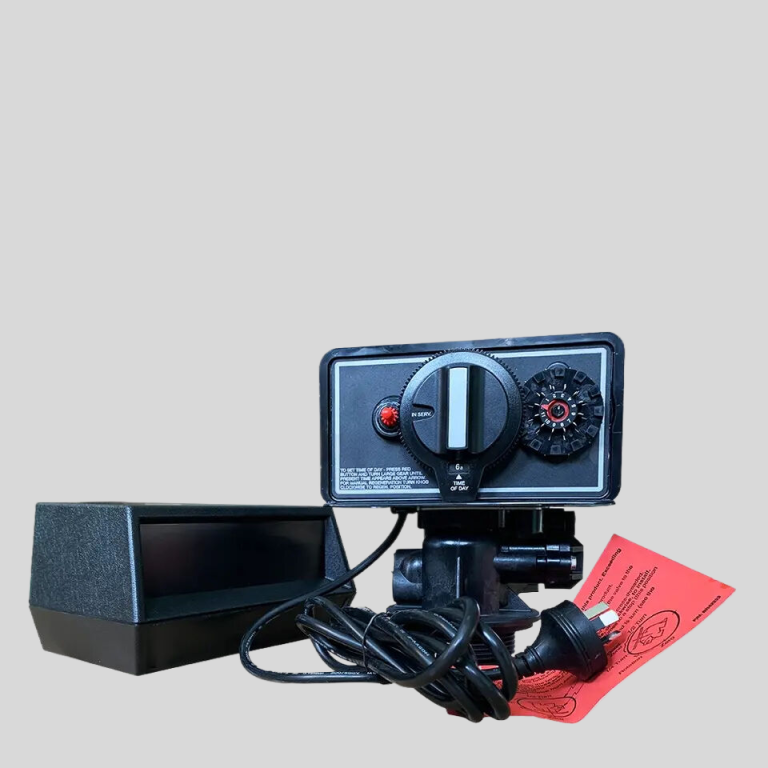
- Shanghai ChiMay’s water quality analyzer and softener valve platforms provide the instrumentation backbone that makes the revenue narrative defensible to investors and lenders.
The Old Story: Waste Water as Overhead
For most of industrial history, waste-water streams were an overhead expense. Plants budgeted for tanker hauling, permit fees, effluent treatment contracts and periodic penalty exposure. The number lived on the cost side of the ledger and was rarely questioned unless a regulatory event forced attention.
Three shifts have made that story obsolete.
- Freshwater is now priced into project bankability models in a way it was not five years ago.
- Salt and mineral recovery has matured technically, opening a revenue channel that offsets the ZLD operating cost.
- Sensor-driven optimisation has lowered the operating cost of ZLD to a level competitive with legacy discharge in high-water-stress basins.
Together, these shifts have re-framed waste water as a potential revenue line.
The Three Revenue Streams
A modern industrial ZLD plant generates value through three streams:
Stream 1: Recovered Water. A ZLD plant recovers 92–97% of its feed water as distillate suitable for reuse in cooling, boiler make-up, process water or, with an additional polishing step, ultra-pure applications. The value of that water depends on local freshwater cost and scarcity; in high-stress basins it can be worth USD 2–5 per cubic metre, and in extreme cases (Chile Salar, southwest U.S., MENA) it exceeds USD 6 per cubic metre when transportation and reliability are considered.
Stream 2: Recovered Minerals. Crystallisation produces sodium chloride, sodium sulfate and, depending on feed composition, calcium chloride, potassium salts and specialty by-products. Salable-grade recovery has become feasible with better crystalliser control, and mineral revenue commonly offsets 8–14% of ZLD operating cost. For plants in specialty verticals (lithium brine, mining, textile), the offset can reach 25%.
Stream 3: Avoided Compliance Capital. A ZLD plant retires future compliance capital exposure — new permit conditions, plume liability, tank replacement and downstream community remediation. Actuarial studies of U.S. petrochemical sites suggest USD 8–20 million per site in avoided compliance capital over a fifteen-year horizon.
Aggregating the three streams, well-designed ZLD assets are now producing positive returns on a five-to-eight-year horizon in mid-water-stress regions, and three-to-five years in high-water-stress regions.
Where the Business Case Falls Down
The 40–55% of ZLD projects that miss their ROI schedule tend to share four attributes:
- Under-instrumented crystallisers, producing off-spec mineral batches that cannot be sold at nominated grade.
- Under-instrumented recovery loops, producing water quality drift that forces reuse consumers to fall back on freshwater.
- Under-defended sustainability disclosure, producing weaker ESG storytelling than peers and slower access to concessional finance.
- Under-planned regulatory anchoring, exposing the project to permit changes mid-life.
Each of these failure modes is fundamentally a data problem, not a process design problem.
Why the Sensor Layer Multiplies Returns
Sensor spending in a ZLD project is 3–6% of capex, yet it underwrites 60–70% of long-term availability and mineral quality. The reason is that every revenue stream — recovered water, recovered minerals, avoided compliance — is a defensible number only if there is a sensor trace behind it.
Practical implications for the business case:
- Water reuse ratio is only credible if metered inflows, metered reuse and closed mass balance are historised for at least 90 days at 1-minute resolution.
- Mineral yield is only credible if crystalliser feed pH, conductivity and ORP are historised and cross-checked against product batch tests.
- Avoided compliance capital is only credible if effluent parameters (COD, ammonia, oil-in-water, suspended solids, pH) are historised across the design life of the plant.
Shanghai ChiMay’s transmitters expose each of these values into the plant historian without proprietary gateways, giving the finance team defensible inputs at every review.
The 2026 Investor Conversation
Financing conversations for ZLD projects in 2026 look different from those five years ago:
- Green loans and sustainability-linked bonds with water KPIs now represent an estimated USD 68 billion of annual issuance globally, and pricing step-downs are tied to verified reuse ratios.
- Blended finance is available from development banks for ZLD projects in stressed basins, but requires audited baseline and improvement data.
- Insurance capital underwrites both regulatory risk and reuse water quality, and premiums are lower when instrumentation coverage is documented above 90%.
The instrumentation layer is now a financing consideration, not just a plant-engineering one.
Aligning Operations and Finance
Operating and finance teams historically report different numbers for the same plant. In 2026, that gap costs projects capital. A single-source ZLD data model, drawn from the plant historian and tied to auditable sensor traces, gives the finance team the same numbers that the plant manager sees on shift. Shanghai ChiMay works with customers on standardising the tag structure, calibration cadence and reporting envelope, so the water reuse ratio in the sustainability report matches the water reuse ratio in the shift log.
Governance Signals Investors Now Watch
Beyond the financial numbers, investors and lenders in 2026 track five governance signals for ZLD assets:
- Named responsible officer for water strategy at board level.
- Site-level KPI publication (freshwater intensity, reuse ratio, discharge quality index).
- Instrumentation coverage above 90% on process-critical streams.
- Historian retention above 90 days at 1-minute resolution.
- Third-party sensor calibration and drift trending audit signed annually.
Plants that report against all five are receiving preferential finance terms.
Closing Note
Industrial ZLD in 2026 is a genuine circular-economy asset when the sensor layer is treated as capital investment rather than commodity procurement. Waste streams become revenue lines when the physics of the plant meets the discipline of the data. Shanghai ChiMay’s instrumentation platforms are engineered around exactly that translation, so the business case investors read and the business case operators execute are the same case.