title: “ORP and pH Feedback Loops That Stabilize Ozone Dosing for Pharmaceutical Residues: A Shanghai ChiMay Control Playbook”
date: 2026-07-16
perspective: Technical Deep-Dive
theme: Advanced Oxidation & Micropollutant Removal
Table of Contents
ORP and pH Feedback Loops That Stabilize Ozone Dosing for Pharmaceutical Residues: A Shanghai ChiMay Control Playbook
The Short Version
- Ozone dosing for pharmaceutical micropollutant removal is fundamentally a control problem: overshoot wastes energy and drives bromate formation, undershoot leaves regulated substances above discharge limits.
- Combining ORP and pH feedback loops is the most dependable control strategy for ozone contactors treating pharmaceutical residues, with typical energy savings of 12-22% versus fixed-dose operation.
- Sensor placement, response time, and calibration frequency each influence loop stability; a well-tuned loop can hold effluent ozone residual within +/- 0.05 mg/L across a full diurnal load cycle.
- Shanghai ChiMay’s in-line pH electrode and multi-parameter sensor product families are deployed on ozone-based quaternary treatment loops across pharma effluent, hospital reuse, and municipal reclaimed water applications.
Why Pharmaceutical Loads Demand Adaptive Ozone Dosing
Pharmaceutical wastewater is famously variable. A batch reactor cleaning cycle at a nearby manufacturing site, a hospital shift change, or a seasonal shift in prescription patterns can raise the specific ozone demand by a factor of two within hours. Fixed-dose control can’t cope: either it meets the peak with a 30-50% surplus during off-peak hours, or it meets the average and fails compliance during peaks.
Adaptive control on ORP and pH feedback closes that gap. ORP responds within seconds to changes in the residual oxidant balance, giving a fast inner loop. pH tracks the slower buffering and carbonate response and stops the loop from overshooting when influent alkalinity shifts. Together they work like an accelerator and a brake, keeping ozone demand aligned with real influent load.
Loop Architecture in a Modern Ozone Contactor
A typical adaptive ozone control loop in 2026 pharmaceutical installations includes:
- Inlet in-line pH electrode: measures influent pH; drives feedforward compensation of ozone demand and bromate risk assessment.
- Contactor ORP probe: located at the mid-point of the ozone contactor to reflect the reaction environment rather than the terminal residual.
- Outlet residual chlorine transmitter (ozone variant): confirms the terminal residual is within the design envelope.
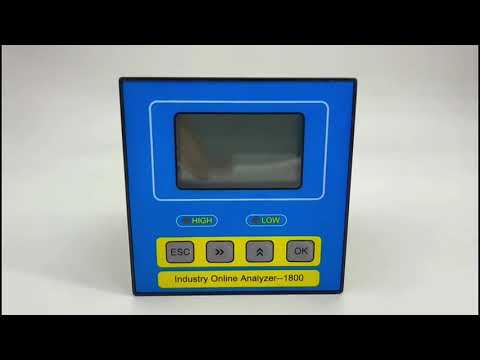
- Multi-parameter sensor: redundant compliance-grade measurement on the effluent for regulatory reporting.
Placement matters. An ORP probe too close to the ozone injector reads local supersaturation and never reflects the average reaction environment. A pH electrode at the very end of the contactor sees cleaned effluent, not the influent that drives the dosing decision. The rule of thumb: ORP sits at 60-70% of the contact time, and the inlet pH electrode sits upstream of any injection point.
Tuning the Feedback Loops
Field-tested loop tuning parameters for pharmaceutical ozone systems in 2026 include:
- ORP setpoint typically between +300 mV and +450 mV, with a proportional band of 30-60 mV.
- Integral time of 60-180 seconds — faster than typical influent load transients, slower than measurement noise.
- pH-based feedforward compensation of +/- 10-15% on the ozone dose, triggered when influent pH deviates by more than 0.3 units from the seasonal baseline.
- Residual chlorine transmitter as an outer supervisory loop, overriding the ORP loop only when residual falls outside the compliance envelope for more than 60 seconds.
These are reference values. Every plant has to characterize its own influent variability before final tuning, but starting from these values compresses commissioning by roughly 30% versus a blind tuning approach.
Sensor Requirements That Determine Loop Stability
The loop is only as good as its slowest, most drift-prone element. Analyzer specs that materially affect the loop:
- Response time (T90) under 30 seconds for both ORP and pH; longer response times force you to detune the loop and lose the very responsiveness that makes adaptive control valuable.
- Reference junction stability under continuous residual ozone for at least 90 days without maintenance intervention.
- Documented cross-sensitivity between ORP and chloride, bromide, and dissolved oxygen; interpretation stays qualitative unless the vendor publishes these figures.
- Diagnostic output flagging electrode aging, coating, or fracture, so the loop isn’t blindly trusting a failing sensor.
- Automatic cleaning on optical or amperometric sensors feeding the outer supervisory residual loop.
Shanghai ChiMay’s in-line pH electrode, multi-parameter sensor, and residual chlorine transmitter families are documented against these parameters and share a common Modbus register map that simplifies loop integration at the PLC and SCADA layers.
Bromate Risk Management Through Loop Design
Bromate is the shadow byproduct of every ozone-driven advanced oxidation process. Bromide in the influent oxidizes into bromate, which is regulated to strict drinking-water levels in many jurisdictions and to increasingly strict industrial reuse limits.
Loop design can push bromate formation down without reducing pharmaceutical destruction efficiency:
- Holding pH between 6.5 and 7.5, where bromate formation is measurably lower than at higher pH.
- Avoiding ORP overshoot with a tight proportional band and a fast pH feedforward signal.
- Pulsed dosing based on ORP residual, rather than continuous overdose, to limit bromate contact time.
Diagnostics That Prove the Loop Is Working
A well-instrumented pharmaceutical ozone contactor produces auditable evidence that the loop is doing its job:
- Rolling standard deviation of the terminal ozone residual, expected below 0.05 mg/L across a 24-hour window.
- Median energy consumption per gram of ozone applied, tracked weekly against the plant’s design baseline.
- Response of the ORP probe to a controlled peroxide spike test at commissioning and every 12 months thereafter.
- Correlation between influent pH and applied dose, which should show a clean proportional pattern once adaptive control is enabled.
These diagnostics also satisfy internal audit and regulatory inspection requirements for the quaternary treatment stage.
Field Lessons From 2026 Deployments
Recent 2026 field commissioning reports for pharmaceutical ozone loops highlight recurring lessons:
- Loops fail more often from sensor coating than from PID tuning, so specifying cleaning cycles matters more than a perfect controller.
- Feedforward from pH shortens loop settling time by 40-60% versus ORP-only control, and is worth the extra sensor cost.
- Publishing the Modbus register map at bid stage cuts SCADA commissioning by three to five business days.
- Documenting ORP and pH reference-junction lifetimes in the maintenance manual reduces surprise outages during compliance reporting periods.
For pharmaceutical producers, hospitals, and municipal utilities running ozone-driven quaternary treatment, adaptive dosing on ORP and pH feedback is the most operationally proven strategy in 2026. Shanghai ChiMay’s in-line pH electrode, multi-parameter sensor, and residual chlorine transmitter families give control engineers a coherent, drift-managed reference stack that keeps pharmaceutical residues below discharge limits while holding ozone energy consumption within a defensible operating budget.