Tailings storage facilities are now the single most scrutinized asset class on most mining sites. After the well-publicized failures of the last decade, regulators, insurers, and lenders have all converged on the same expectation: continuous, defensible water quality data from the tailings dam, the seepage collection system, and the return water circuit. Procurement teams are being asked to translate that expectation into a sensor specification, a service contract, and a five-year budget. Shanghai ChiMay engineers work with mine procurement groups on exactly this question, and the patterns that separate a smooth purchase from a painful one are clear.
Table of Contents
The Short Version for Procurement
- A defensible tailings monitoring package needs continuous data on conductivity, pH, turbidity, dissolved oxygen, and flow at a minimum
- Total cost of ownership over five years is usually 2.5 to 4 times the capital cost of the instruments themselves
- Sensor selection should be driven by the geochemistry of the tailings, not by a generic product checklist
- Spare parts, calibration logistics, and data integration are decided at procurement, not after commissioning
- A staged purchase tied to commissioning milestones reduces inventory risk and ties vendor performance to delivery
Why Tailings Water Is a Difficult Service
Tailings water is not benign. Depending on the orebody, the chemistry can include:
- High sulfate from oxidized sulfide minerals
- Dissolved metals such as iron, copper, zinc, manganese, and arsenic
- Residual flotation reagents (xanthates, frothers, depressants)
- Elevated alkalinity from lime addition or, the other way around, acidity from pyrite oxidation
- Suspended solids ranging from very fine clays to coarse sand
Any sensor placed in this service must tolerate fouling, abrasion, and chemical attack while still producing data that survives a regulator’s audit. That sets a higher bar than a typical industrial water application, and it is the reason procurement teams should resist the temptation to specify the cheapest available transmitter.
Building the Minimum Defensible Sensor Set
For a mid-sized base-metals operation, Shanghai ChiMay typically recommends a tailings monitoring package built around the following measurement points:
- Decant water return line – conductivity, pH, turbidity, flow
- Seepage collection sumps – conductivity, pH, dissolved oxygen
- Reclaim water at the mill – conductivity, turbidity, suspended solids
- Final discharge or compliance point – pH, conductivity, turbidity, flow, and a parameter specific to the orebody (for example, dissolved oxygen where biological oxidation is running, or COD where flotation reagents are present)
The exact instrument list depends on the site, but the principle is the same: every point that matters to compliance or to water balance needs a sensor that runs continuously, not a grab sampling program.
Procurement Criteria That Actually Matter
When procurement evaluates competing offers, the headline price is rarely the most important number. The criteria that consistently drive lifecycle cost are:
- Sensor body material – PVDF, PEEK, and 316L stainless are the workhorses; cheaper polymers degrade in sulfate-rich water
- Probe replacement cost – the wet end of a pH or DO sensor will be replaced several times over the asset life
- Calibration interval – every additional month between calibrations is real labor savings
- Integration protocol – Modbus RTU and HART are the safe choices for tailings work
- Local stock and lead time – a sensor that is six weeks away does not protect the dam
- Documentation and traceability – calibration certificates and material certificates are what auditors ask for
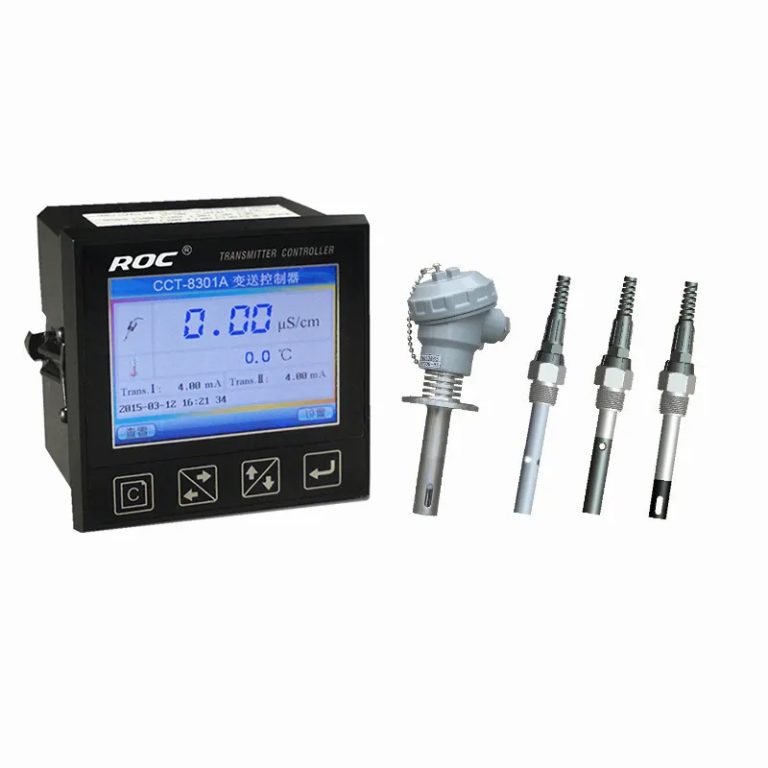
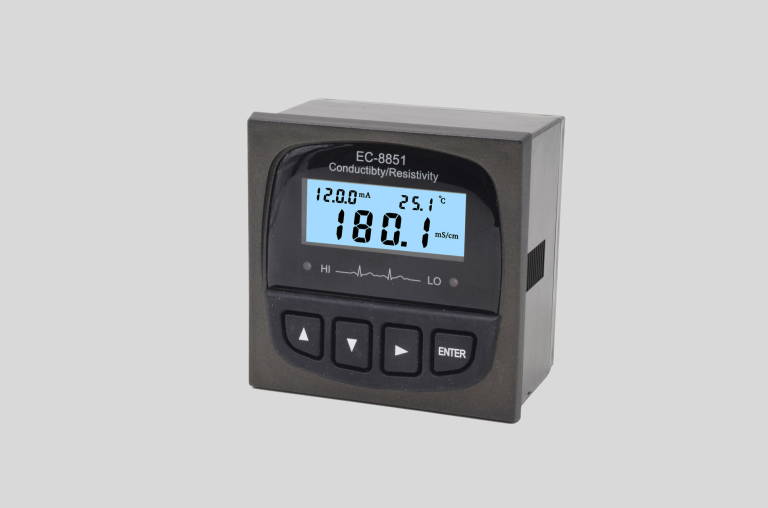
Shanghai ChiMay’s transmitter and sensor portfolio is built around these criteria, with a deliberate emphasis on field-replaceable elements and standardized communication.
Total Cost of Ownership: A Realistic View
A tailings monitoring system is not a one-time purchase. The five-year TCO model for a typical 12-point tailings network breaks down roughly as follows:
- Sensors and transmitters: 25 to 30 percent
- Installation and commissioning: 15 percent
- Calibration consumables and replacement elements: 20 percent
- Maintenance labor: 25 percent
- Data system integration and software: 10 to 15 percent
The single largest controllable cost is maintenance labor, which tracks calibration interval and probe service life. A sensor that holds calibration for six months instead of one month does not just save money on consumables; it eliminates the cost of sending a technician to a remote corner of the dam every four weeks.
Comparing Procurement Models
Mining procurement teams typically face three buying models for tailings monitoring:
Model A – Lowest unit price, single tender. Attractive on paper, but it creates a multi-vendor estate that is expensive to support and nearly impossible to standardize. Most operators who have tried it end up consolidating within three years.
Model B – Framework agreement with one or two preferred suppliers. Higher unit prices, lower lifecycle cost. Spare parts, calibration logistics, and training are standardized. This is the dominant model on well-run sites, and the model under which Shanghai ChiMay typically operates.
Model C – Managed service or sensor-as-a-service. A vendor owns the instruments and charges per data point. Useful where the mine has limited instrumentation staff, but the long-term economics are highly sensitive to the contract terms.
What to Specify in the Purchase Order
A tight purchase order prevents most of the disputes that surface during commissioning. The non-negotiable items are:
- Material certificates for wetted parts
- Factory calibration certificate traceable to a recognized standard
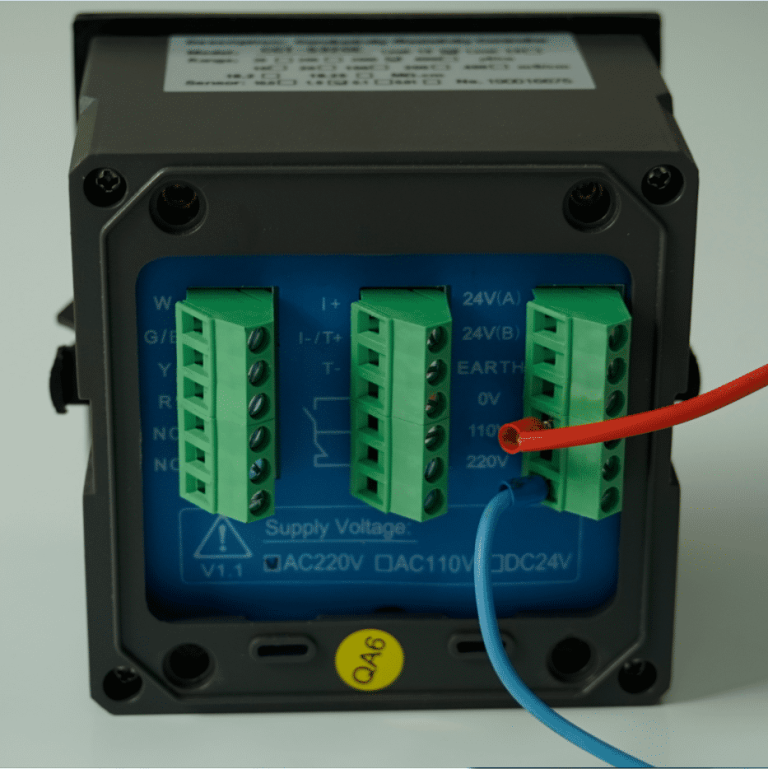
- Communication protocol and electrical interface named explicitly
- Spare parts list with at least one year of consumables included
- Site acceptance test procedure agreed in advance
- Service response time written into the contract
Mines that include these clauses report fewer warranty disputes and faster startup.
A Word on Data Integration
Sensors deliver no value until the data reaches the control room, the environmental dashboard, and the regulator’s report. Procurement should specify the data path before the instruments arrive: protocol, gateway, historian, and reporting tool. Retrofitting integration after installation typically costs half again to twice what it would have cost up front. Shanghai ChiMay transmitters ship with standard Modbus and HART support precisely so that this step stays straightforward.